Case File Overview
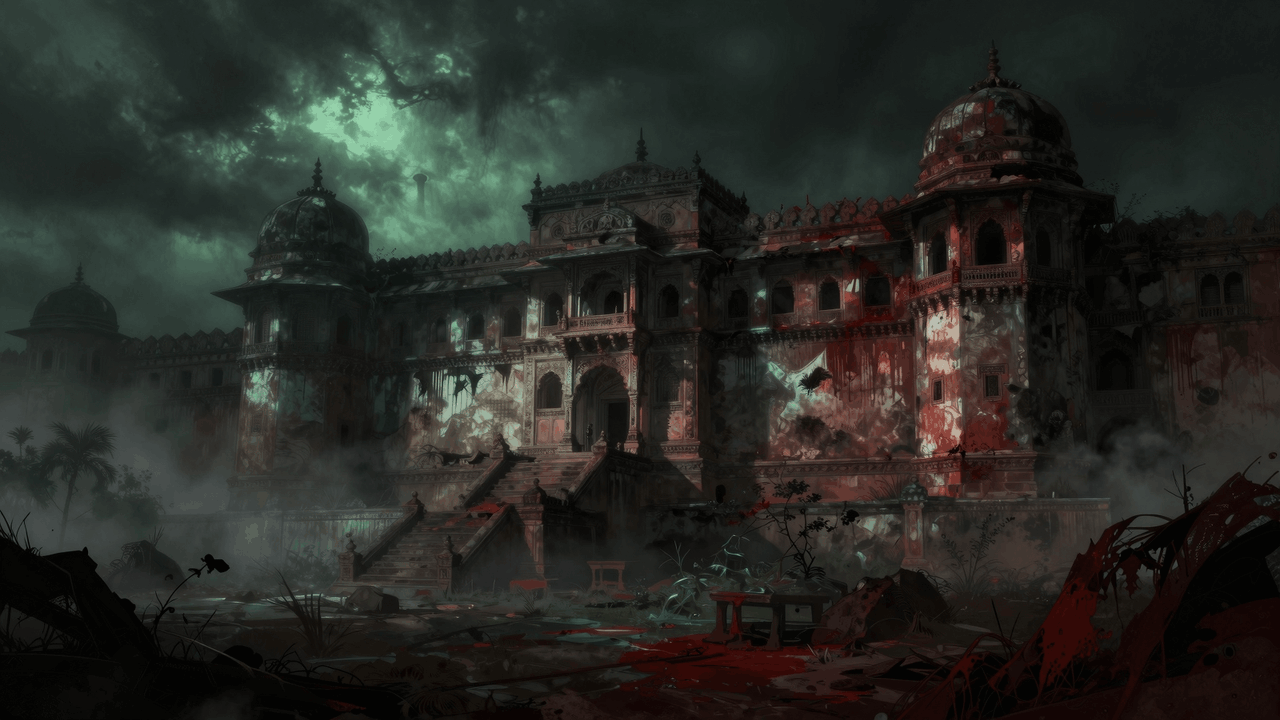
Bhangarh Fort in Rajasthan is widely regarded as one of India’s most haunted sites. Built in the late 16th century, the ruined fort city is the only Archaeological Survey of India protected monument with a formal ban on entry after sunset. Two enduring curses — one from a holy man and one from a rejected tantric sorcerer — explain its sudden abandonment and the persistent stories of phantom music, screams, and unseen forces that still draw paranormal enthusiasts and dark-tourism visitors.
Historical Background
Bhangarh Fort was founded in 1573 by Raja Bhagwant Das of the Kachwaha Rajput dynasty of Amber (the lineage that later ruled Jaipur). He established the fort-city as a seat for his younger son, Madho Singh, younger brother of the famous Mughal general Man Singh I, one of Emperor Akbar’s Navratnas. The location in a valley of the Aravalli hills offered strategic defence and access to trade routes between Delhi, Agra and the desert kingdoms.
At its height the settlement contained thousands of houses, markets, temples, havelis and a multi-storey royal palace. Estimates of the original population range from several thousand to as many as 9,000–10,000 residents. The fort was protected by ramparts and five gates (including the Lahori, Ajmeri, Phulbari and Delhi gates). Inside stood important temples dedicated to Gopinath, Someshwar, Keshav Rai, Mangla Devi, Hanuman and Ganesh, many still partially intact today.
The city flourished through the early 17th century under Madho Singh and his successors. Decline set in after the death of Chhatra Singh around 1630. By the early 18th century the region faced political instability following the weakening of Mughal authority. In 1720 forces associated with Jai Singh II of Jaipur attacked or pressured the settlement. Famine, shifting trade routes and water scarcity further accelerated abandonment. By the early 19th century the fort city stood empty. After Independence the site came under the protection of the Archaeological Survey of India, which continues to maintain the ruins and enforce the unique daylight-only access rule.
Legends & Curses
Two powerful local legends account for Bhangarh’s sudden desolation and its reputation as a cursed place.
The first involves a reclusive holy man, often called Baba Balau Nath or Guru Balu Nath, who meditated on the hill long before the fort was built. When Raja Madho Singh sought permission to construct the city, the sadhu agreed on one strict condition: no building must ever cast its shadow on his dwelling. For years the condition was respected. Later, however, a descendant (commonly identified as Ajab Singh) raised the height of the palace or added structures whose shadow fell across the ascetic’s abode. Enraged, the holy man cursed the entire settlement. Legend says roofs collapsed, the population fled or died, and any attempt to rebuild a permanent roof still fails to this day.
The second and more widely told story centres on Princess Ratnavati, famed throughout Rajputana for her beauty and intelligence. A tantric sorcerer named Singhia (or Singhiya), who lived on the outskirts of the town, became obsessed with her. Knowing he could never win her hand by ordinary means, he enchanted a bottle of perfume or fragrant oil (ittar) that the princess’s maid was buying in the market. The spell was designed to make Ratnavati fall hopelessly in love with him the moment she applied it.
The princess, however, sensed the deception. She threw the bottle onto a large boulder. The magic transferred to the stone, which then rolled downhill and crushed the tantric. As he lay dying, Singhia uttered a terrible curse: the princess, her family, and every inhabitant of Bhangarh would meet destruction; no soul would find peace, and the city would remain forever desolate. Within a year, according to the tale, war broke out (often linked to conflict with nearby Ajabgarh). Ratnavati and most of the population were killed. Their spirits, the story continues, still wander the ruins, unable to be reborn.
Both legends coexist in local oral tradition. Many residents of the surrounding villages treat them as historical fact rather than folklore, and the ASI’s strict after-dark ban has only reinforced the belief that something malevolent still claims the site once the sun sets.
Reported Phenomena
Visitors and locals have reported a consistent set of experiences for decades, even though none have been scientifically verified. Common accounts include a sudden, oppressive sense of being watched, especially in the upper palace levels and long corridors. Many describe unexplained cold spots in the Rajasthan heat, the sound of footsteps in empty rooms, faint music or the jingling of anklets near the Nachan Ki Haveli (dancers’ palace), and distant screams or cries after dark.
Some claim to hear the bustle of a marketplace — voices, laughter, the clink of jewellery — coming from the ruined bazaar area long after all tourists have left. Shadow figures are frequently mentioned: a turbaned man moving among the stones, or a veiled woman on the ramparts who vanishes when approached. Electronics sometimes fail — cameras drain, phones switch off — without obvious cause. A few night-time trespassers (who risk legal action) have spoken of disorientation, panic, the sensation of being pushed by invisible hands, or of becoming trapped in what feels like a looping path until they finally escape the outer walls.
Local guards and nearby villagers generally attribute any genuine danger after sunset to wildlife from the adjacent Sariska Tiger Reserve (leopards, jackals and other animals) rather than spirits. Still, the stories persist and form a core part of the site’s modern identity as India’s most famous haunted fort.
Architecture & Layout
The ruins spread across a gently rising hill. Entering through the main gate, visitors first encounter a cluster of Hindu temples built in the Nagara style. The Gopinath Temple stands on a raised 14-foot plinth and retains fine yellow-stone carvings. Nearby are the Someshwar, Keshav Rai, Mangla Devi, Hanuman and Ganesh temples, some more intact than others. The residence of the head priest (Purohitji Ki Haveli) sits within the temple complex.
Further in lies the Nachan Ki Haveli (dancers’ mansion) and the remains of the Jauhari Bazar marketplace. The royal palace occupies the highest point. Originally said to have seven storeys (Satamahala), only about four levels survive, with broken columns, carved niches and open courtyards. From the upper terraces the Aravalli hills and the surrounding valley stretch away — beautiful by day, forbidding once the light fades. The entire complex is enclosed by ramparts and multiple gates, giving a clear sense of the fortified city that once thrived here.
Visitor Information & Access Rules
Bhangarh Fort is open to the public only during daylight hours. The Archaeological Survey of India strictly prohibits entry before sunrise and after sunset; the rule is enforced and legal action can be taken against violators. There is usually a modest entry fee. The site lies roughly 50 km from the Sariska Tiger Reserve, about 85–90 km from Jaipur, and roughly 280 km from Delhi. The nearest major airport is Jaipur International.
Wear sturdy shoes — the paths are uneven and strewn with rubble. Carry water, especially in the hotter months. Guides are available and can recount the legends in detail. Photography is allowed in most areas. Because the fort borders wildlife habitat, remaining after dark is both illegal and genuinely unsafe. Most visitors explore for 1.5–3 hours. The atmosphere is powerful even in full sunlight; the combination of silent ruins, temples and open sky creates a memorable, slightly unsettling experience without any need for night-time risk.
Why It Has Its Reputation
Bhangarh is unique among Indian heritage sites because the ASI’s standard “no entry after sunset” notice is applied with particular strictness and has become publicly associated with the paranormal. While officials cite practical reasons — unlit ruins, uneven terrain and wildlife — the combination of two dramatic curses, the sudden historical abandonment of a once-prosperous city, and decades of consistent visitor reports has cemented its status as the country’s most famous haunted fort. Whether one interprets the stories as folklore, psychological suggestion or something more, the place itself remains powerfully atmospheric and historically significant.
Frequently Asked Questions
Is Bhangarh Fort really haunted?
There is no scientific evidence of ghosts. The site’s reputation rests on two enduring local legends, consistent anecdotal reports from visitors, and the unique ASI ban on after-dark entry. Many locals believe the curses are real; officials emphasise safety and wildlife.
Why does the ASI ban entry after sunset?
Officially the restriction exists for safety: the ruins are unlit, the ground is uneven, and the area borders the Sariska Tiger Reserve where wild animals are active at night. The ban has, however, greatly amplified the haunted reputation.
Can you stay overnight at Bhangarh?
No. Entry between sunset and sunrise is strictly prohibited. Attempts to remain inside after dark are illegal and can result in legal action.
What are the main legends?
One involves a holy man whose dwelling was shaded by the fort, leading to a curse of destruction. The other concerns Princess Ratnavati and a tantric sorcerer who, after his love spell failed and killed him, cursed the entire city to desolation.
Is Bhangarh suitable for children?
The site is atmospheric and contains ruins with uneven surfaces. It is generally not considered kid-friendly for younger children, especially those who may find the legends frightening.